About Me

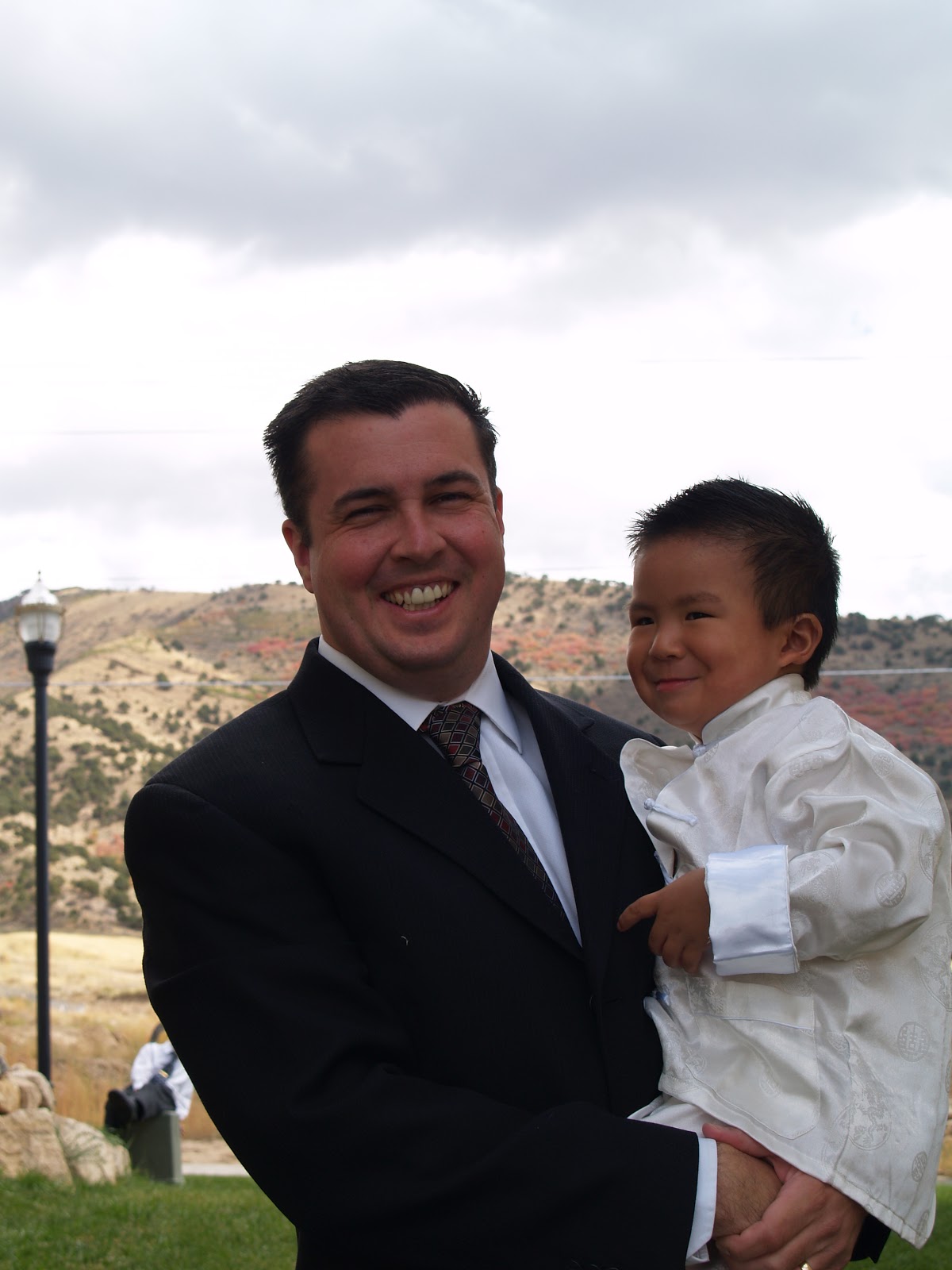
My photo
I'm the author of four books: Warrior SOS, The Work of Death, Together Forever, and Leaders Wanted. I'm in the doc film Please Remove Your Shoes. I've blogged for The Washington Times, and I write for Guns.com. I've worked for the high-profile U.S.-led Roadmap to Mideast Peace in Israel and Palestine. I've also worked as a SWAT team leader, a Federal Air Marshal and a sole-source training instructor on a classified contract with a U.S. government customer. My master's degree is in Military Studies and terrorism. I'm a former noncommissioned and commissioned Army officer, with service in Iraq. I've been Scuba diving and skydiving; I have trained with members of the U.S. Olympic Ski Team, and I'm an FBI-trained crisis negotiator. My interests lie in helping others and in strengthening America through inspiring moral courage, government fiscal responsibility and accountability, and maintaining principles that have made--and will continue to make--the United States of America a blessed and prosperous country. I'm a father of six, a husband, and a police officer. I reside in Utah, and I'm a Mormon. See also https://jeffreydenning.wordpress.com.

August 10, 2012

Gun Stand Off -- What Not to Do

School Resource Officer (SRO) in a Tennessee high school stands off gun to gun for several minutes with a man who worked at the school. The date of the raw footage from CCTV is in Aug 2010.  The stand off begins at 3:00 minutes in this video.


Analyzing tactics are in order. We all can learn from this incident. Thankfully, no one was hurt, but because of the situation, the officer could have been killed and then many more people could have been killed or seriously injured. In this situation, the SRO was justified in using deadly force.

Warriors need to do difficult things for the blessing and protection of others, even when – and especially – when it’s hard to do. Warriors (police officers, security professionals and military personnel) do the job others cannot. If you don't want to be a warrior, find another job. That's okay. Not everyone's cut out to be warriors. Being a warrior isn't fun or glamorous. It's a thankless, difficult duty. If not, there would be no Warrior SOS.

Here are a few thoughts to keep in mind with any tactical situation:

Be prepared to use deadly force. This emotional, psychological and spiritual decision must be made long before the incident arrives. You may have to shoot a man, a woman, pregnant lady or a young teenager. Think about it before the time arrives.

Be prepared to stop a co-worker, a neighbor, a teammate, friend or even a relative. You may have to physically hurt or kill someone that you know or someone you’ve talked with or like or someone you think you know well. An old military adage goes like this: Have a plan to kill everyone you meet. No one said being a warrior is fun. Hollywood only makes it look appealing and attractive, but it's not. There are hard days and difficult times that nothing on the Big Screen could ever accurately portray.

Action is faster than reaction. If someone’s pointing a gun at you, you must act fast. He can pull the trigger anytime he wants to and you’ll be DRT – dead right there.

Shoot already!

Shoot from behind cover.

Get to hard cover – and stay there until the threat stops. Move only if you are gaining a tactical advantage without sacrificing your own safety.   

Shoot on the move if you need to. Practice it. Do anything, but be sure to never – ever – get involved in a so-called Mexican standoff. You could lose. Period. The results could be disastrous. It’s your job to protect those who cannot protect themselves, so do it! Remember, action is faster than reaction.

Don’t ever give up your weapon. At least the SRO did that right.

Shoot center mass. A dear friend and rookie police officer asked me why not shoot someone in the arm or the leg. He didn’t want to hurt anyone. A few years later, after gaining some experience and realizing the threat of human violence, he was shot and killed. Shoot center mass. I wrote an article on why shoot center mass here for Guns.com, where I’m a tactical writer.

Know ballistics and wound penetration. If you’re going to shoot, realize that the suspect might live. Go visit with an ER doctor in a big, violent city. Shoot the suspect if you're justified. Stop the threat. He’s a huge threat to everyone. Hopefully bad guys will drop their weapons, but don’t count on it. Hopefully they’ll live after you shoot them several times.

Shoot until the threat stops. Forget the two-shots and stop drill. Try a six-shot rhythm drill on the guy’s chest. I wrote about that for an Action Target newsletter I posted here in my other blog – the Jeffrey Denning blog. I also demonstrated it here below this with Guns.com. The audience was a couple of cop buddies of mine.


Have a self aid/buddy aid kit handy. You’ll need it when you least expect it.

Know and be confident in your weapon disarming techniques. Know that criminals, crazies and kooks can learn it just as well as you can.  

Lastly, stay safe. Train hard. And fight to win.

Like I state at the end of all of my Guns.com articles….

Until next time continue to hone your skills and keep adding to your tactical toolbox.


To read amazing interviews with warriors, check out Warrior SOS: Interviews, Insights and Inspiration, the book on Amazon.com. Here's the link: http://www.amazon.com/dp/B00D3WO7VK


Cop Shoots 75 yard Shot at Sikh Temple Shooting Suspect: Saves Lives


Police officer in Wisconsin shot the active shooter at the sikh temple from 75 yards away, according to this LA Times report. It was only then that the shooter took his own life. The officer has been described as a "tactical expert" among his peers. He  is also a firearms instructor.

It was alluded in the aforementioned article that the officer shot the suspect with a patrol rifle. Patrol rifles are in the AR-15 family, meaning they are .223s. It is important to note that if you zero your rifle at 25 yards, point of aim/point of impact, then at 75 yards the shot will go high and you may miss your targets. Hold low at 75 yards if that is the case.

Zeroing at 100 yards is much better. You don’t want to have to play Kentucky windage in a firefight under 100 or 200 yards. If you only have a 25 yard/meter range, then the shot placement should be 1-1/2 inch below your point of aim (at 25 yards). For more information on this topic, see this great article at Shooting Illustrated -- and get some training -- by Kenan Flasoski, retired and vetted SOF sniper and owner of FAST762.com.

For those officers or honorable citizens who may not happen to have an AR handy when bad things happen (think Murphy’s Law here), check out the video I made for Guns.com above.  I took a 100 yard shot at a police pistol range with a couple of cop friends of mine.

Train for the worse and expect the best. Stay safe. Train hard. Train smart. And fight to win.


To read amazing interviews with warriors, check out Warrior SOS: Interviews, Insights and Inspiration, the book on Amazon.com. Here's the link: http://www.amazon.com/dp/B00D3WO7VK

August 4, 2012

Former NFL Player Chad Lewis Hikes with Wounded Warriors


To read amazing interviews with warriors, check out Warrior SOS: Interviews, Insights and Inspiration, the book on Amazon.com. Here's the link: http://www.amazon.com/dp/B00D3WO7VK

August 2, 2012

August 16th -- National Airborne Day

August 16th is National Airborne Day. 
Within the Senate Resolution 527, the 112th Congress resolved that it
    (1) designates August 16, 2012, as ‘National Airborne Day’; and
    (2) calls on the people of the United States to observe National Airborne Day with appropriate programs, ceremonies, and activities.
Interestingly, my friend's father jumped on D-day. He was shot while descending and was unconscious until a recovery team grabbed his lifeless body and threw him into the back of a large military truck collecting all the dead. As soon as my friend's dad hit inside the back of the truck, he awoke and screamed out in pain.
An avid photographer, my friend's dad had an old camera he jumped with, taking at least six pictures before he hit the ground. Those pictures, along with the jump wings he still carries in his wallet to this day, are avid reminders of his war experience.
After surgeries and recovering, he went back to jump in the pacific theater of operations as the battles and forays of World War Two still continued.
Today, this WWII Veteran, a widower, is confined to a wheel chair. Not long ago, due to his declining health, he had to have both legs amputated.
We thank him and men like him who have served in an airborne capacity.  
To read S Res 527, click here.

PS A reader sent us this link to NRA Life of Duty about a paratrooper. Thanks!


To read amazing interviews with warriors, check out Warrior SOS: Interviews, Insights and Inspiration, the book on Amazon.com. Here's the link: http://www.amazon.com/dp/B00D3WO7VK

August 1, 2012

Funeral Talk at the Service of John Cloninger (1970-2012)


Note: I dedicated my book Warrior SOS to this great man.


Funeral Talk notes for the Services of John Cloninger (1970-2012)
Given Sat. Feb 25, 2012, Morgan, Utah 
The Church of Jesus Christ of Latter-day Saints (a.k.a. Mormon)
by Jeffrey Denning

I am reminded of the words of a congregational hymn.
Do thou, O Lord, anoint mine eyes
That I may see and win the prize.
My heart is full; mine eyes are wet.
Oh, help me, Lord, lest I forget.
So may my soul be filled with light
That I may see and win the fight,
And then at last exalted be,
In peace and rest, O Lord, with thee.
(“Before Thee Lord, I Bow My Head,” Hymns 1985, no. 158, vs. 2.)
Times like this tend to make us ponder how fragile life is. But this is not how the story ends. 
In 1991, serving in the U.S. Army in West Germany, John volunteered to deploy to Iraq in support of Desert Shield.  As 19-year-old in the midst of war, he had a lot of time to ponder the things of eternity. As its said, “There’s no such thing as atheists in foxholes.” But John wasn’t on the ground in a foxhole. He was a helicopter door gunner who did less shooting and more helping refugees in northern Iraq and Turkey. 
The sense of life and death in war served as a catalyst to catapult John to seek out eternal, heavenly things. A friend invited him to hear about the good news of the gospel of Jesus Christ. Full-time missionaries from the Church of Jesus Christ of Latter-day Saints taught him about the Savior’s restored gospel. Two young men, roughly the same age as John, taught the gospel in plainness and without dilution. They said, in essence, “don’t just take our words for truth, but pray and ask God yourself whether what we’re teaching in true.” Such a message available to -- and encouraged by -- every person seeking God’s truth.
John took that challenge seriously. He read in the Book of Mormon--Another Testament of Jesus Christ, and he prayed to know whether or not it was true. In his heart and in his mind, John felt that what was being taught was true. He received a witness of it, a comforting and calming reassurance -- a peace he had never before experienced. That answer would forever change the course of his life. 
These spiritual missionary discussions that started and ended with prayer were familiar to his spirit. It wasn’t that John was learning these things for the first time. No. He was re-learning it. The missionaries taught him that we all lived before we were born; we were spirits waiting to come to earth and gain physical bodies. What the missionaries taught may have seemed new -- and it was the first time he had heard about it in this life -- but, in reality, John was one of the great ones. He was prepared before the foundation of this world in the grand councils of heaven.  “Even before [John Cloninger was] born, [he], with many others, received [his] first lessons in the world of spirits and [was] prepared to come forth in the due time of the Lord to labor in his vineyard for the salvation of the souls of men” (D&C 138:56).
John would later teach others, especially his children, that God is our Eternal Father in Heaven, the Father of our spirits, and as such each of us are brothers and sisters. 
John gained a personal and powerful witness -- a conviction of truth -- that Jesus Christ overcame death so that we all might live again. John could proclaim with the Apostle Paul that because of the atonement of Jesus Christ, “Death is swallowed up in victory. 
“O death, where is thy sting? O grave, where is thy victory?” (1 Corinthians 15:54-55). 
After honorably finishing his mandatory military enlistment, John was eager to begin his new life as a civilian. He wanted to find a companion, a helpmeet, someone to talk to and share his life with. Attending a single’s congregation in Dallas, Texas, John met Cindy. The two of them instantly became inseparable. Marriage soon followed. 
As Cindy’s older brother, I must admit I was a little skeptical of this former military man, but that only lasted for a short time. Why? because John had the uncanny ability to win the respect of others rapidly. His kindness and pleasant personality was attractive. He could instantly make others feel comfortable, and I was no different. I soon went from guarded and cautious about this man dating my little sister to feeling extremely happy that there was a man who could actually exceed the expectations of who I’d want to marry my sister. I knew he would protect her and provide for her. 

Just starting out, John knew that he should devote everything to his new bride and the children that soon would come into their home. That even included getting rid of his second car, a corvette. He had his priorities in order.
After starting their life together John pursued his occupational desires. He wanted to become a medical doctor, although he didn’t yet have a college degree. Tenaciously, he began working and studying. He waited tables in the evening and went to school full-time during the day. He studying tirelessly and did very well. A few kids and several years later, John decided to choose podiatry -- the study of the foot and ankle. He told me he chose that route because it was the shortest of all med school programs and, most importantly, being a podiatrist would allow him to spend maximum time with his wife and their children.  Again, John had his priorities in order.
With the passing of Sept 11, 2001, and after passing all of his final medical board exams, John was determined to join the Army once more. This time, he’d become an officer and a doctor. John carefully thought things through. He was neither overly spontaneous nor a flagrant risk-taker; in short, he was simply intelligent. Cindy, of course, had unwavering faith in his level-headed decision-making abilities and soon became a supportive Army wife.
John had excelled academically, and his talent and physical dexterity during surgery became very evident to senior military surgeons at Fort Bragg, and later Fort Hood. Operating on multiple wounds and injuries from the knee to the big toe, John performed literally hundreds of procedures during his military residency. 
With the wars in Afghanistan and Iraq hundreds of soldiers had received devastating injuries so the types of procedures John was mandated to perform during his residency program came rapidly. John’s medical school classmates who took civilian jobs were jealous of the amount of experience he was getting. It wasn’t that John just got the experience, but he was wanted above his peers in the operating room. Humbly, John was very skilled at his life’s profession. 
In 2005, John and Cindy’s life was about to take a challenging turn. They had already experienced a myriad of health struggles with their children and John had lost his step-dad, now John was getting deployed to Iraq. There was nothing John loved more than Cindy and their children. He put nothing before them in his unwritten list of priorities. Family always came first. 
Tearful good-byes weren’t easy. John had even prayed and asked God if he would live through his deployment; he was ready to accept God’s will for him. John knew that God heard his prayers; he knew his prayers were never ignored. He went forward in faith, although leaving his family was heart-wrenching. 
I am confident that God, the micromanager of our lives, needed John’s skills and his priesthood power in Iraq. John would often tell me of how spiritual the church meetings were in Iraq. Through no fault of his own, John was being stretched emotionally. Undoubtedly, like I would also experience later in a deployment to Iraq, John’s prayers became more meaningful and heartfelt. Perhaps, like the Savior in Gethsemane, “he being in an agony, prayed more earnestly” (Luke 22:44).

At one time, John’s site was attacked with great force. He was one of only five doctors stationed there (which included one psychiatrist). During the attack each of them were gathered together in an unprotected area when a barrage of deadly mortars came sailing in. One of them hit within feet of John. The ordnance hit and went through a fuel tank of a military vehicle, but it didn’t explode. John’s skills were needed. 88 casualties were received over the next 45 minutes. With the skills he possessed and that he happened to be there at that time is no coincidence in my mind. Only the Lord knows, but I venture to guess that some child has a dad alive today because John was there to save lives. 
Saving lives wasn’t the only thing John lived for. John recognized the importance of the worth of a soul. He confided in me the joy he felt in sharing the gospel with others on the base there in Iraq. Through John’s example, others became interested in his peculiar lifestyle and his professional demeanor. Others wanted to know more about the Church of Jesus Christ because of John Cloninger. 
He wasn’t like the others: John didn’t drink alcohol (although that wasn’t allowed in Iraq at the time anyway); he didn’t swear or curse; he didn’t look at pornography; he didn’t use tobacco products, or drink coffee or tea. He was faithful to his wife. He treated others with kindness and love, compassion and concern. Indeed, something was truly different about him and that difference attracted others to him.  
In addition to keeping the covenants he made at baptism and the covenants he made with God in the temple, John had special gifts of charity (or pure love) and peace that his family, whom he missed so terrible, knew best. John was approachable and gentle. He missed cuddling with his children, and he certainly missed the way they would come and sit on his lap and snuggle up to him. 
Nothing was easy for Cindy while she was home, all alone with the children. With John away she had to make all of the day to day decisions on her own. Cindy and the children continued to pray for his safety while he also prayed for them. 
Soon they were united again. The time came for John’s obligation to end. He had never planned on making a career of the military, but he loved all the military stood for. John had raised his arm to the square more than once, making an oath to “support and defend the Constitution against all enemies, foreign and domestic.” 
John and Cindy had made their faith in God the greatest priority of their marriage and their family life. They knew that “Happiness in family life is most likely to be achieved when founded upon the teachings of the Lord Jesus Christ. [And that] Successful marriages and families are established and maintained on principles of faith, prayer, repentance, forgiveness, respect, love, compassion, work, and wholesome recreational activities.” (The Family: A Proclamation to the World)
Having received the Holy Ghost after baptism and being worthy to feel of the guiding hand of the Comforter, John had learned to recognize well the promptings of the Spirit. When asking Heavenly Father in prayer where they should raise their children, they received undeniable guidance. Our eternally compassionate and loving Father in Heaven, who knows all things and sees the future before Him, guided John and Cindy to move to the Morgan Valley. After seeing how wonderful the people of this community are, there is no wondering why the Lord lead the Cloninger family here. The Lord knew the future. He knew who could best help Cindy and the kids. 
I am reminded of what Abraham Lincoln said in his second inaugural address, delivered on March 4, 1865, during the final days of the Civil War and only a month before he was killed.  He said, "With malice toward none; with charity for all; with firmness in the right, as God gives us to see the right, let us strive on to finish the work we are in; to bind up the nation’s wounds; to care for him who shall have borne the battle, and for his widow, and his orphan.” 
Even today, many of you have observed Cindy’s strength and the their families faith. I believe your many heartfelt prayers in their behalf, and your loving, Christ-like service and kindness towards them has made -- and will yet make -- this transition and trial less burdensome. I thank you for that. 
With five kids, John and Cindy felt they were missing another tiny spirit from their family. After penitent study by faith and prayer, John and Cindy flew to China to adopt an orphan who had foot problems. Through their eyes, and through the Lord’s plan for their family, John had the right skills to help Eli’s feet and legs, but even more than that, he was their son. 

Having been sealed in the holy temple, not just “until death do you part,” but “for all time and eternity,” John and Cindy knelt across the alter gazing into the symbolism representing eternity, with their young adopted child. He was now an eternal part of their family. Nothing could separate John and Cindy from each other or from each one of their six kids. 
Cindy and John were sealed by the everlasting and binding priesthood sealing authority in the house of the Lord. When they were sealed, someone had made a cross stitch which was framed and hangs on their wall. It quotes a portion of a Bible verse, Eccl. 4:9-10 that “Two are stronger than one, for if one falls, the other will lift him up again.” 
I looked up the verse, including the following verse. There is more to it. In the King James Version, it reads, 
“Two are better than one...
“For if they fall, the one will lift up [the other]: but woe to him that is alone when he falleth; for he hath not another to help him up.
“Again, if two lie together, then they have heat: but how can one be warm alone?”
As sad as it is today, Cindy and John had a celestial marriage and everlasting bond.  They will be together forever someday.
All was going well. John had a successful practice he created and had wonderful relationships with each of his patients. He helped them. Since he genuinely cared for all people, every person who knew him or who made his acquaintance -- particularly his patients -- felt important in his presence. John had a unique humility. He was approachable and easy to speak with. He brought out the best in others. 
The practically perfect life of John and Cindy Cloninger and their adorable children would unsuspectingly be interrupted forever on Sept 28, 2010.  Without warning, John experienced an excruciatingly severe head pain. Cindy rushed him to the hospital. Within days John was undergoing brain surgery where a walnut-sized tumor was removed. John’s faith was unconquerable. He knew that the Creator of worlds without number -- the Creator of mankind -- could perform miracles that would defy the logic of man’s finite understanding. 
Later, doctors stated that his recovery was remarkable. John had faith to be healed and, by the laying on of hands, through faith, the priesthood authority and the will of our Father, miracles occurred. 
John, a committed and determined provider, had missed a lot of work due to his brain surgery. After the doctor’s found “no deficit,” and all were stunned at the remarkable recovery -- which did, indeed, defy science but not the Creator in whose hands lay all the elements and atoms -- John returned to see his patients. There were others who needed his help. Maybe we’ll know someday in full why the Lord performed this magnificent miracle, temporarily sparing John’s life. There are several reasons I can think of. It is certain, though, that his time had not yet come. 

In this very chapel in December 2010, at the age of 41, Brother John Thomas Cloninger stood at this pulpit and spoke eloquently on a topic with which he had become very familiar: hardships
I’d like to share some of the words he said that day. Thankfully, he wrote down the words to his talk. I believe his children, as they grow, will be very thankful to read their father’s words when they are having hardships of their own -- the kind John told me was hurtful to him, not seeing them grow up.
John, in his talk, said this:
We don’t seem grow as fast spiritually when things are going well...
When we are going through trials we should be running towards our Lord, not running away from him... We must go to our Savior in prayer with a willingness to be meek, submissive, and a willingness to endure all that the Lord desires to inflict upon us.
“I do have a testimony that as we pray and show faith through our trials, our burdens may not be removed on the timeline we want, but our strength to endure will be magnified.
“God is a God who performs miracles in the past, present, and future. I can’t control the events that are about to occur. My part is to have faith and prayer and the knowledge all [is] going to be well.”
John had faith. He was a stalwart example of faith, especially as his faith was tested and tried. 
In the midst of John’s great suffering and pain, he was totally selfless. He prayed for my friend who had a brain aneurism. John prayed for him, although had not ever met my friend before that time. John was like the Savior in that he was full of compassion, mercy and charity -- the pure love of Christ.
John believed in modern-day prophets and apostles. One such prophet had a vision of the spirit world. John was not bereft of such manifestations. In speaking of the life hereafter, this prophet declared,
“I beheld that the faithful elders of this dispensation, when they depart from mortal life, continue their labors in the preaching of the gospel of repentance and redemption, through the sacrifice of the Only Begotten Son of God, among those who are in darkness and under the bondage of sin in the great world of the spirits of the dead.
“The dead who repent will be redeemed, through obedience to the ordinances of the house of God,
“And after they have paid the penalty of their transgressions, and are washed clean, shall receive a reward according to their works, for they are heirs of salvation” (D&C 138:57-59).
I have no doubt where John is or what he is now doing. He is a vanguard for his family, preparing the way for them to join them in their heavenly home together when the time is right. 
Finally, forgive me for telling a personal experience; but I believe it has relevance, and I feel impressed to share it. 
John joined the military before I did, so I often asked his advice and questioned him about his service. He went to Iraq the second time before I went the first time. I think I knew a little about his experience in Iraq. 
In my own desperate circumstances, with a lovely wife and four tiny children (at the time) home in America, separated from them by war and conflict, I leaned to my Heavenly Father, the One sure refuge for peace in a troubled world.

During one particularly troubling day after nearly a year spent in Iraq, living in the torment and pain associated with war and conflict, I was walking on the dusty roads silently pleading for help, comfort and peace. My prayers had, at that time, become much more fervent.

As I pleaded with our Heavenly Father, I felt an overwhelming feeling burning deep into my heart and mind. I knew and comprehended that He was listening to me—that He could walk beside me and hold my hand, as a little child needing his Father's loving guidance. As I watched my swaying hand, I learned more about our divine heritage than I ever had previously. We were created in His image! (See Genesis 1:26-27)

His hand was in likeness of mine, and mine like His. I comprehended and knew in my heart that God, our Father, has a body of flesh and bone as tangible as man's, though perfect and immortal. I realized more deeply then than ever that I could speak with Him as a man speaks with another man, face to face.

God is our Father—our Father in Heaven. I believe that when we reunite after this life is over it will surprise us just how familiar His face is to us.

We are indeed God's children. If for that reason alone—knowing we are children of a loving Heavenly Father—we should never give up and always have hope.
I prayed to Heavenly Father as His son. Sons need fathers and fathers need sons. John is now at home, walking hand in hand with his God and our God, with his Father and our Father. He is now back to that God who gave him life (see Alma 40:11).
I know God lives. He is our Father, the Father of our spirits. I know that Jesus is the Christ and that through his infinite atoning sacrifice we all will live again. We can be sanctified and justified to enter into his eternal presence. I know that the gospel of Jesus Christ has been restored through the prophet Joseph Smith; that the prophet today holds all the keys and authority to stand at the head of Christ’s church. I know -- I know -- that families can be together forever through Heavenly Father’s plan. In the name of Jesus Christ, amen.


To learn more about the purpose of life or how families can be together forever, visit Mormon.org or speak to a member of the Church of Jesus Christ of Latter-day Saints. See also John Cloninger's last church talk he titled Hardships.


To read amazing interviews with warriors, please check out Warrior SOS, the book on Amazon.com.

July 21, 2012

Police Officer Shot, but Survived. Police Officer Prayer

In May 2012, a CHP officer shot in the hand and the vest by an evil would-be assassin. 'Couldn't upload the radio traffic audio, unfortunately, but the officer was calm and reported all the necessary information to the excellent 9-1-1 operator. He did so while pursuing the suspect until his tire went too flat to pursue further.


A Police Officer's Prayer
author unknown

Oh Almighty God,
Whose Great Power And Eternal
Wisdom Embraces The Universe,
Watch Over All Policemen and
Law Enforcement Officers.
Protect Them From Harm
In The Performance Of Their Duty
To Stop Crime, Robberies,
Riots And Violence.
We Pray, Help Them Keep
Our Streets And Homes Safe
Day And Night.
We Recommend Them To
Your Loving Care
Because Their Duty Is Dangerous.
Grant Them Your Unending Strength And
Courage In Their Daily Assignments.
Dear God, Protect These
Brave Men & Women,
Grant Them Your Almighty
Protection,
Unite Them Safely With Their
Families After Duty Has Ended.
Amen.


To read amazing interviews with warriors, check out my book Warrior SOS: Interviews, Insights and Inspiration, the book on Amazon.com. Here's the link: http://www.amazon.com/dp/B00D3WO7VK

July 18, 2012

Armed Robbers get Shot by 71 year old man -- the Good Guy


It's sad that this man might be facing post traumatic stress. He saved a lot of people. Who knows what could have happened. I'm glad he was armed -- legally armed, no doubt.


To read amazing interviews with warriors, check out Warrior SOS: Interviews, Insights and Inspiration, the book on Amazon.com. Here's the link: http://www.amazon.com/dp/B00D3WO7VK

July 9, 2012

Hidden war zone scars claim another soldier's life: Dale McIntosh

Dale McIntosh, warrior, patriot, friend...pictured with children in Central America. Family photo taken from Deseret News [Utah] Article

I spoke with Dale after his brother Blake passed. I wrote about Blake and Dale here on Warrior SOS. I'm crushed, and I think of my friend often. As a member of the Church of Jesus Christ of Latter-day Saints, and a warrior, Dale and I had a lot in common. There's not many Mormon's I know who are also warriors. I highlighted a part in the article below mentioning religion. PTSD is a moral wound.

Regardless of the religion, civil, good and decent people abhor war. Dale did. But, unlike a lot of people, he was good at it. It's hard when no one else understands that.

It has been said that war is hell. Indeed. Indeed, war is hell. Just this week I spoke with two OIF Vets who spoke openly to me about their own PTSD and depression. Suicide seems to be on the cusp for too many vets. Even one suicide is too many.

Here's the article on my late friend Dale.


Hidden war zone scars claim another soldier's life

by Doug Robinson, July 5, 2012

Dale McIntosh was no stranger to death. When it wasn't everywhere around him, it was a constant threat, something that kept him literally looking over his shoulder for months at a time.
A former Marine, he hired himself out as a privately contracted bodyguard in the Middle East, where he lived on the edge and saw and did things so terrible that it haunted him. He survived firefights, ambushes, exploding cars, road mines, snipers and rocket-propelled grenades. In the end, he escaped without any wounds, or at least none we could see.
When he returned, he seemed to be the Dale that his friends remembered — charming, gregarious, warm, outgoing — but inside, he was hurting and disturbed. McIntosh brought demons home with him.
In 2006, I wrote a lengthy profile about McIntosh, then a student at Westminster who took time off from his studies to pursue quick money and an adrenaline fix in Iraq and Afghanistan. This is the postscript: McIntosh took his own life in February in Harlingen, Texas. He was 35.
"It's still hard for me to talk about," says Dale's older brother Robert. "Another veteran falls through the cracks."
Robert, who is an anesthesiologist and former Army officer who served in Iraq, says his brother suffered from post-traumatic stress disorder and depression. It's another cautionary tale about the damage of war and violence, the kind of damage that is more difficult to see and repair than a bullet hole.
I met Dale through a mutual friend in 2006, and we had several discussions about his experiences, which was the basis for the Deseret News story. The youngest of five boys, Dale grew up in a military family. His father Tony served in the Army for 30 years, including a stint in Vietnam, before settling the family in Star Valley, Wyo. Four of his five sons served in the military.
After graduating from Utah State, Dale served five years in the Marines — part of it in special ops — but felt unfulfilled because he never saw action. He compared it to being an athlete who never got in the game. Eager to use his military skills and see action, he signed on to do private security work. At the time, there was a big demand for security firms, the most famous and controversial of which was Blackwater. With a shortage of manpower, the U.S. government hired the firms to protect American interests and personnel in the Middle East. They were largely ungoverned by law, which did not make them popular at home or abroad. McIntosh spent six months in Afghanistan, five months in Iraq, two months in Bosnia and then another two months in Iraq before returning to Utah in the fall of 2005.
The work was dangerous, but lucrative. McIntosh made as much as $25,000 in one month. Aside from the money, there was another reason McIntosh took the work. He told me several times that he craved the thrill of combat. "It's addicting because you do get an adrenaline rush, and it gives you a new appreciation for life," he says.
When he came home and enrolled at Westminster to study finance, he struggled to fill that void. "I started going to the shooting range and shopping for a bullet bike, something to get the blood pumping," McIntosh told me then. He slept with a pistol by his bed.
I eventually lost track of McIntosh, but I learned from his brothers that he returned to the Middle East to do more security work after the story appeared. Between trips abroad he completed his degree in finance at Westminster and moved to Glendale, Ariz., to enroll in the MBA program in international business at Thunderbird School of Global Management.
Dale seemed to be doing well, but Keith and Robert say he was conflicted by his experiences. I remember during a visit to my home. he opened his laptop and showed me gruesome and violent photos and videos he had brought home from the Middle East. The video showed ambushes recorded by cameras mounted on the dashboard of bulletproof SUVs as security teams made their way through Baghdad and other hostile urban areas. He showed me photos of men lying dead in the street with the tops of their heads shot off and bodies that had been picked clean by packs of dogs. McIntosh, when asked the obvious question, said he had killed people, but didn't elaborate. He had also seen friends die.
Tony Sr., McIntosh's father and a Vietnam vet, worried about his son's trips abroad and seemed to foresee trouble. "The things people see in a combat zone … sometimes it's hard to get over it," Tony told me in 2006, a year before he died of cancer. "Sometimes they never get over it. A lot of these homeless people are vets. They just couldn't handle it mentally."
Robert says that Dale "implied in a sad way that he had to kill many, many people. I suspected this, but never really knew. He told me he had to do some terrible things. … He struggled with combat-related guilt and couldn't reconcile that with his current civilian life."
Says Keith: "He had a hard time adjusting to this life. He'd come back here and most of the kids he was going to church or school with – well, he had gone through things they hadn't experienced. Over there he had to kill people to stay alive and they're trying to kill him. Back here he'd meet people whose biggest problem is someone didn't call them on Saturday."
Developments at home only added to Dale's sadness. Counting a sister-in-law, four of eight family members died of cancer. This, say family members, affected Dale profoundly. Dale's death makes it five who have died. "I have a family photo of the eight of us, and now there are only three left," says Keith. "It's tough to look at it."
Robert says Dale had been suicidal for some time, the result of depression, PTSD and anxiety, and he took medication for all of them. He was hopeful for his brother when he returned from another overseas mission. "I read one of his journal entries in which he writes about his testimony and faith in God, and that he didn't know if this is good but 'I like what I do but it conflicts with my beliefs. I think this is my last mission, and I'm going to do something that doesn't clash with what I believe.' He came back full of energy."
Needing only a foreign language to complete his MBA in international business, Dale was invited to live with Robert and his family in Harlingen to study Spanish and live rent-free. "He was studying and living with me, my wife and my two daughters," says Robert. "They all fell in love with him. It was the happiest I had seen him."
In the spring, Dale decided to go to Guatemala and later Dominican Republic to immerse himself in Spanish. In the fall he ran out of medications for his depression and none of the local doctors would fill his prescription. In November, one of Dale's former military associates who was working in Dominican Republic called Robert to tell him that Dale had attempted suicide. "He had cut both radial arteries," says Robert, who flew to Dominican Republic and brought his brother back to Texas.
"I told Dale, 'I'm going to help you but you've got to do everything I say,' " says Robert.
Dale was hospitalized at a VA facility in Texas. Robert criticizes the care his brother received there, calling it "cursory and not in depth." He was eventually released to Robert's care and put on an anti-depressant, but for some reason not Adderall, a drug used to treat PTSD that he had taken with good results when he lived in Utah. "There was a disagreement among psychiatrists," says Robert. "One wanted him committed; another didn't."
During the next couple of months, Robert says, Dale was overdosing Adavan, an anxiety medication. Robert describes him as frequently paranoid, angry and disoriented. He says he confronted Dale and told him: "You're in trouble; this is going to end badly. I can't help you by myself anymore." He urged Dale to enter a volunteer treatment program in Waco, Texas, for soldiers with PTSD and offered to pay for it. According to Robert, Dale was convinced he was trying to lock him away.
Robert says Dale's behavior became so erratic that it upset his family, so he convinced him to move to another house with the promise that he would visit him frequently.
"He was there four or five days," recalls Robert. "I'd go there and spend all day with him. That Saturday morning I saw him, and he was upset. I told him he needed more help. I had not taken his guns. He kept them in a closet. I told him that this was getting bad and that he needed help. I got him groceries; he said he'd take a nap. A few hours later he took his own life. I went back to see him and found him. It's been the most excruciating pain I've ever felt."
Robert has spent months ruminating on the final weeks of his brother's life. He believes that despite all the programs offered by the VA, veterans fall through the cracks because there is not a protocol to follow.
"Suicide has a stigma," he says, "but it's the end of a disease process, like cancer. It happens to a lot of soldiers. Young guys go over there and do things they were taught were wrong their whole lives and then they come back and it's very difficult. We are a civilian society; most people haven't done this, so there is no understanding of what they've been through, no support network. It's like these cute little pit bulls they put in a ring to fight and maim and then they expect them to interact with kids. It doesn't work."
In the end, there is something Dale said that has stuck with his brother Robert. "He told me, 'I don't want to die; I just want the pain to stop.' "


July 4, 2012

Official Obituary for Dale McIntosh

On this July 4th, as we celebrate Independence Day -- and when many veterans have mixed feelings about the sounds and the blast effects of large fireworks or the rat-a-tat-tat of packages full of firecrackers -- I thought of my friend, Dale McIntosh. How appropriate that today his brother would choose to release the official obituary in the newspaper, again as it were. Like so many warriors who suffer the hidden scars of battle, Dale was no exception. Dale was a true patriot, an unflinching operator who loved his country and who cherished freedom more than life. He was loved by many and will be missed.

Dale Riley McIntosh aka "Chewy" 4/23/1976 ~ 2/26/2012
Dale passed away at his home in Harlingen, Texas. He was preceded in death by his mom and dad, Tony and Jual, his brother Blake and sister-in-law, Kimberly. Dale is survived by his three brothers, Tony, Keith, and Robert McIntosh and their families. Dale grew up with a love and passion for his family, friends, and his country. He was a high achiever and excelled to the top of his class in his endeavors. He was an Eagle Scout and after high school he joined the Special Forces National Guard Unit. In 1998 Dale Joined the Active Duty Marines. He graduated basic training with honors and in the top two of his class. Through hard training he became a certified Force Recon Marine, a Combat Diver, Marine Sniper, and quickly rose to the rank of Sergeant. After his service in the marines ended, Dale joined a Private Contract Company hired by the US to protect dignitaries overseas and in Afghanistan. Dale served many years in the protective service until the later part of 2011. He served in Iraq, Afghanistan, Bosnia, Africa, and many other third world countries. Dale graduated magna cum-laude from Westminster College in Business in 2007. He also attended Thunderbird School of Global Management for his MBA in International Management. As many of our service men and women, and those civilians who put their lives on the line in combat zones, Dale had experienced the horrors of war many times over. Although you never would have known it by his fun loving personality back home, it had its toll on him. Dale, may your Heavenly Father welcome you into his loving arms, and you receive the comfort and peace you were longing for here on this earth. Until we meet,.. we love you bro. Memorial Services [previously] held Saturday, March 24, 2012. 


To read amazing interviews with warriors, check out Warrior SOS: Interviews, Insights and Inspiration, the book on Amazon.com. Here's the link: http://www.amazon.com/dp/B00D3WO7VK

June 27, 2012

AR for Home Defense from Shooting Illustrated

I recently had a chat with retired Special Forces sniper Kenan "Ski" Flasowski. Since retiring he started up a private firearms training company in Texas, Fast762  (http://www.fast762.com/). Ski has "been there, and done that."

Recently Ski wrote a very informative article for Shooting Illustrated titled Zero Distance for a Home Defense AR-15.


AR-15-style carbines are the most popular long arms in America these days, and many people are buying or building their own for competition, hunting, varmint control and more often than not, self-defense. While many folks invest in professional instruction on how to operate and employ their new carbine, others wish to go it alone and train independently or with friends and family. A common question for new AR owners and even some more experienced shooters is, at what distance should the AR-style carbine be zeroed? To avoid any confusion, the term “zero” means the point at which the path of the bullet intersects with the shooter’s line of sight (LOS).

My intent is to provide the “80-percent solution” for people who may have limited range facilities and are concerned about placing accurate fire on bi-pedal mammals of the outlaw variety. Also, I am totally committed to keeping things as simple as possible when planning for encounters with an armed threat in your own home or on your property.

The Long Answer
The long answer is (as usual), “that depends.” What does it depend on? A number of factors: Intended use, type of sight, caliber, type of ammo and barrel length, to name a few.

For our purposes, let’s keep it to the following specifications: The carbine itself is chambered in 5.56 NATO/.223 Rem. with a 16-inch barrel. The sighting device is a non-magnified red-dot/reflex sight, as such units are most appropriate for short-range, CQB-type shooting—engaging targets quickly while under duress. Ammunition will be limited to 55-grain and 62-grain FMJ loads, as they are the most prevalent. The intended use of the carbine is for home and self-defense in an urban environment for target distances of less than 200 yards, particularly less than 20 yards.

We also need to establish what an acceptable level of accuracy is for human targets within 200 yards of the shooter. In most cases, placing rounds within 3 MOA should be sufficient. This equates to all rounds impacting within 6 inches at 200 yards, 3 inches at 100 yards and less than 2 inches at 50 yards.

Two terms we need to understand are “holdover” and “holdunder.” The first refers to the act of placing the point of aim (POA)—red dot, crosshairs, front sight, etc.—ABOVE the place where you want the bullet to go. The second is just the opposite, aiming BELOW where you want the bullets to go.

I have to stress one factor that all AR owners must understand and accept: The effect of the height of the sights/optic above the bore of the AR-style carbine mandates using holdovers REGARDLESS OF ZERO. Most flattop ARs will have a sight height of between 2.5 and 3 inches (depending on the mount) if using an optical sight. If you mount an optic on the carrying handle, it will be even greater. This results in the shooter needing to apply holdover when engaging targets at close range, i.e. inside a house or other structure, at distances of one to 20 yards. This holdover increases as the distance to the target decreases. At 25 yards, the holdover is about 1.5 inches, incrementally increasing to the sight height at about 7 yards and closer. This means if you want to put a bullet into the eye/nose area of a person holding a knife to a loved one’s throat at a distance of 4 yards, you need to put the red dot at the hairline, or roughly 2 to 3 inches above the eyebrows.

The Short Answer
The short answer to the “At what distance do I zero?” question is, in my opinion, 100 yards (or meters). Here’s why:

READ THE ENTIRE ARTICLE HERE: http://www.shootingillustrated.com/index.php/23123/zero-distance-for-a-home-defense-ar-15/

Remember to check out Kenan's website for great training opportunitieshttp://www.fast762.com/


To read amazing interviews with warriors, check out Warrior SOS: Interviews, Insights and Inspiration, the book on Amazon.com. Here's the link: http://www.amazon.com/dp/B00D3WO7VK